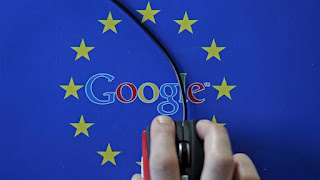
Google faces record $3.4-billion EU antitrust fine: report Google faces a record antitrust fine of around €3-billion ($3.4-billion) from the European Commission in the coming weeks, British newspaper The Sunday Telegraph said. http://www.theglobeandmail.com/report-on-business/international-business/european-business/google-faces-record-34-billion-eu-antitrust-fine-report/article30029730/ Google’s quick answers: Who says they are correct? Do your research Google's "knowledge panels" materialize at random, as unsourced and absolute as if handed down by God: Betty White is 94 years old. The Honda Civic is 2016's best car. Taipei is the capital of — ahem — the "small island nation" of Taiwan. If you've ever Googled a person, place or thing — which, survey suggests, you almost definitely have — then you've encountered these aggressive, boldfaced modules, one of Google's many bids for your fleeting attention. http://www.ther...
by Mary Harper, 02.02.2016 @mbamaung Disruption is in, bu t you need to find your own style, writes Standard Life's Mary Harper. It’s official. Innovation is out, disruption is in. Making things better is so 20th century. Smashing it out of the court with something mind-blowing is the new black. We’ve all heard the "we live in an age of disruption" adage. We certainly live in an age of talking about disruption, if the data is to be believed. Every industry is bursting with examples of inspiring start-ups that have caused uproar and panic in traditional verticals, like the now infamous Airbnb and Uber, and organisations are rushing to set up innovation labs and ‘accelerators’ in a bid to keep up. But what is disruption really? And is attempting to launch an entirely new business model via a centralised ‘disruption incubator’ the only way incumbents can respond? What kind of disruptor are you? Consider these definitions of disruption: "A radic...

Comments
Post a Comment